
 Outdoor lighting is one of the most direct ways to transform the appearance of your home. Chances are that you can probably envision a house or two that you have always admired for its sophisticated and inviting appearance, especially with its carefully placed outdoor lighting after sunset. If you are interested in creating that type of atmosphere outside of your own home, these three types of lighting will help you get there. You can partner with a professional lighting company to design, install, and maintain your outdoor lighting system.
High-Voltage
High-voltage lights with 120-volt currents are the most common forms used because they illuminate large areas like driveways and decks. They are important for safety purposes, but not as subtle or design-oriented as low-voltage lights. Since high-voltage lighting options need to be wired directly into your circuit box and then have the cables held with a protective conduit and buried at least 18 inches below ground, it’s definitely a job for a professional. You might already use high-voltage lights like recessed lights in garage doors, entry lanterns beside the front door, and floodlights in the trees.
Low-Voltage
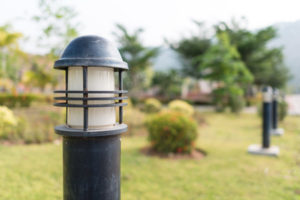
Low-voltage lights can create atmosphere and mood with anywhere from 12- to 15-volt currents. Examples include accent lights, small floodlights, and path lights. Since they are more subtle, they can be used to gently define your landscape and improve night time curb appeal. Path lights and low-voltage recessed lights can create this effect, as can more informal lighting choices like string lights across a balcony or ceiling rafter. Though you may be able to install low-voltage lights on your own, it’s always a better idea to hire a professional company and keep your overall design cohesive.
Solar-Powered
Energy efficiency is the way of the future, so why not start now with solar powered outdoor lights? As long as they are exposed to the sun during the day, they will shine at night without any cost to you.